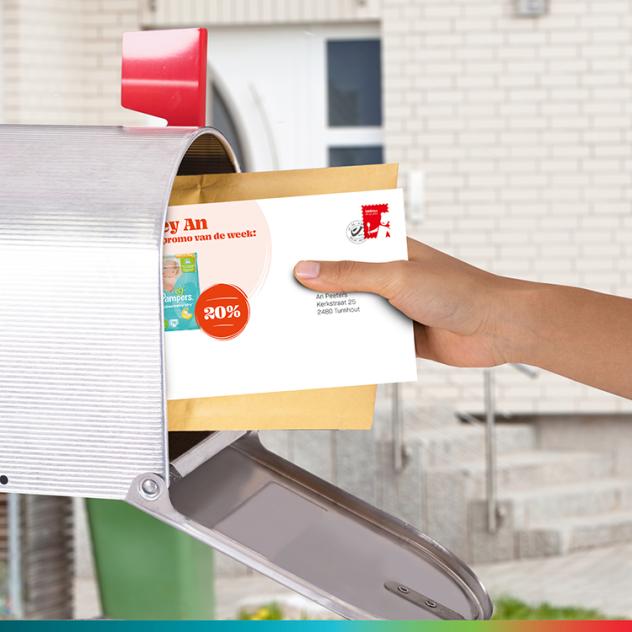
Names and data do not simply fall from the sky. Or actually, in a way, they do. You just need to know how to find them and how to use them.
Data, the new gold
Databases first and foremost tell you a lot about the demographic aspect of your (potential) customers. These are characteristics such as gender, age, place of residence, … But it is not only this rather general data that is relevant; emotional data is also an important source of information. Why? Emotional data helps you discover who is interested in what. Data based on purchase behaviour is a good example of this. Based on what consumers buy, you get to know them a little better each time. You can use this information when drafting your next direct mail campaign.
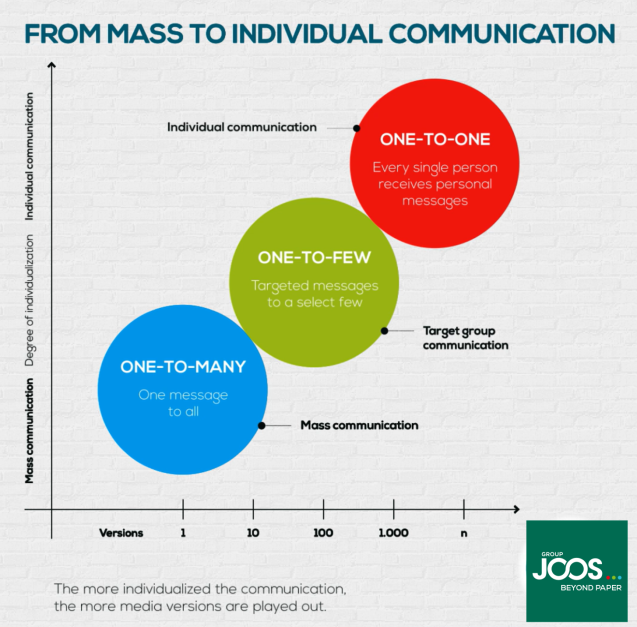
Suppose you run a travel agency, and one of your customers has only booked summer holidays in recent years. Based on this purchase behaviour, you can conclude with 99.99% certainty that this customer prefers the sun. For a direct mail about special spring offers, it is therefore wise to focus mainly on sun holidays with this consumer. Another consumer has shown through their search queries that they like snow holidays. For this direct mail, it is best to put the snow in the foreground.
CRM on point
The basis of a successful personalised direct mail campaign is an extensive Customer Relationship Management database, better known as the CRM. This is where your customer data is stored. What they bought, when they bought it, how much they bought, …

A tailor-made catalogue
A large interior design company sent catalogues to its customers for years. Fun fact: no two catalogues were identical. Every page was built according to the rule if-this-then-that. If the person has children, then photo X. If the person is an empty nester, then photo Y. This way, the catalogues were fully tailor-made. The interior design company was able to develop these catalogues 2.0 because its customer database and CRM system were up to date and very extensive. The company knew exactly who bought what, and based on that, compiled the perfect catalogue.